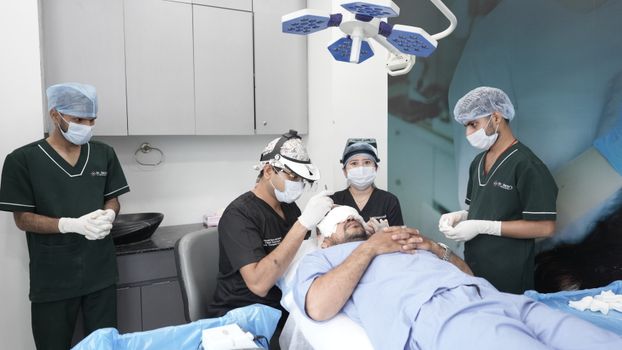
How Accreditation Shapes Mumbai’s Global Standing in Medical Tourism
Mumbai, India’s financial and cultural powerhouse, has emerged as a magnet for medical tourists seeking advanced healthcare at affordable rates. In 2023, Mumbai attracted over 200,000 international medical tourists, contributing an estimated $1.2 billion to the city's economy. Yet, behind the steady influx of patients from Africa, the Middle East, Europe, and North America lies a fundamental pillar: accreditation. Accreditation is not just a bureaucratic stamp — it is a game-changer that underpins trust, safety, and excellence in Mumbai’s bustling medical tourism sector. This article delves into how accreditation impacts international patient choices, the city’s reputation, and the future trajectory of Mumbai as a healthcare destination.
The Accreditation Process: Safeguarding International Patient Interests
Accreditation involves a rigorous evaluation of hospitals and clinics by recognized independent bodies, both national and international. In India, two major accreditation authorities stand out: the National Accreditation Board for Hospitals & Healthcare Providers (NABH) and the Joint Commission International (JCI).
NABH, established by the Quality Council of India, currently accredits over 800 hospitals nationwide, with Mumbai boasting more than 45 NABH-accredited hospitals as of 2024. JCI, on the other hand, is a US-based body that evaluates healthcare facilities against global best practices. As of June 2024, Mumbai is home to 8 JCI-accredited hospitals.
The accreditation process typically includes: - Comprehensive facility inspections - Evaluation of clinical protocols and patient care practices - Review of hygiene, safety, and infection control methods - Staff qualifications and ongoing trainingThese rigorous assessments reassure international patients that Mumbai’s accredited hospitals are on par with leading global medical centers.
Accreditation’s Influence on Patient Decision-Making in Mumbai
For international patients, choosing where to undergo surgery or treatment can be daunting. Accreditation serves as a powerful differentiator, helping patients filter their options. According to a 2023 survey by the Federation of Indian Chambers of Commerce & Industry (FICCI), 76% of international medical tourists cited accreditation as the most critical factor in selecting a hospital in Mumbai.
Key reasons why accreditation matters to foreign patients include: - Assurance of internationally recognized standards of care - Reliable medical records management and transparent billing - Reduced risk of complications and hospital-acquired infections - Enhanced communication and patient support services in multiple languagesFor example, a patient from Kenya seeking cardiac surgery can confidently opt for a Mumbai hospital with both NABH and JCI accreditation, knowing these certifications guarantee proven protocols and emergency response readiness.
Accreditation and the Evolution of Mumbai’s Medical Infrastructure
The drive to achieve and maintain accreditation has spurred Mumbai’s healthcare providers to continually upgrade their infrastructure and services. Over the past five years, accredited hospitals have invested heavily in advanced technologies, staff development, and patient amenities, directly benefiting medical tourists.
Notable improvements linked to accreditation include: - Installation of state-of-the-art diagnostic equipment (e.g., MRI, PET-CT) - Enhanced electronic medical record systems for seamless care - Dedicated international patient departments offering visa, travel, and interpreter services - Stringent infection control measures, resulting in Mumbai’s accredited hospitals reporting a 30% lower hospital-acquired infection rate compared to non-accredited counterpartsThis constant evolution not only boosts patient safety and satisfaction but also keeps Mumbai competitive with other medical tourism hubs like Bangkok, Istanbul, and Dubai.
Accreditation’s Role in Fostering International Partnerships
International insurance providers, healthcare facilitators, and government agencies increasingly require proof of accreditation before referring patients abroad. Mumbai’s embrace of accreditation has paved the way for strategic partnerships with global health insurers and cross-border healthcare organizations.
For instance: - Many European insurance companies now include Mumbai’s JCI-accredited hospitals in their approved network, enabling direct billing and cashless treatment. - Mumbai’s top hospitals have established referral relationships with clinics in Africa, the Middle East, and Southeast Asia, often based on shared accreditation standards. - In 2022, the United Arab Emirates’ Ministry of Health signed agreements with three NABH-accredited Mumbai hospitals for specialized treatment referrals.Such alliances not only bring a steady stream of international patients but also foster knowledge exchange, staff training, and continuous improvement in clinical practices.
Comparing Accredited vs. Non-Accredited Hospitals for International Patients
The tangible benefits of accreditation are evident when comparing outcomes, safety, and patient experience between accredited and non-accredited hospitals in Mumbai. Recent studies and patient surveys reveal significant differences:
| Criteria | Accredited Hospitals | Non-Accredited Hospitals |
|---|---|---|
| International Patient Volume (2023) | 120,000+ | 44,000 |
| Average Patient Satisfaction Score | 4.7/5 | 3.8/5 |
| Post-Surgical Infection Rate | 1.2% | 3.6% |
| Global Insurance Tie-Ups | Extensive | Limited |
| Languages Supported | 10+ | 3-5 |
These numbers illustrate why international patients overwhelmingly prefer accredited institutions, and why these hospitals continue to set the benchmark for medical tourism in Mumbai.
The Future of Accreditation in Mumbai’s Medical Tourism Landscape
As global health standards evolve, so too does the process of accreditation. Mumbai’s hospitals face growing expectations around digital healthcare, minimally invasive treatments, and sustainable practices. In response, many are pursuing new certifications such as ISO 9001 (Quality Management), ISO 27001 (Information Security), and Green Building accreditations.
Emerging trends include: - Digital accreditation processes, enabling faster and more transparent evaluations - Emphasis on patient privacy and data security, especially for international patients - Integration of telemedicine and remote follow-up care accredited under global standards - Eco-friendly hospital certifications, appealing to environmentally conscious patientsWith India projected to reach $9 billion in medical tourism revenue by 2026, Mumbai’s continued focus on accreditation will be essential to maintaining its competitive edge and expanding its share of the global medical tourism market.
Key Takeaways: Accreditation as the Cornerstone of Trust in Mumbai’s Medical Tourism
Accreditation is much more than a certificate on the wall; it is the foundation of Mumbai’s growing reputation as a safe, reliable, and world-class medical tourism hub. By adhering to rigorous standards, accredited hospitals in Mumbai have set themselves apart, attracting tens of thousands of international patients every year and forging global partnerships. As patient expectations and global health requirements rise, the importance of accreditation will only grow, ensuring Mumbai remains at the forefront of international medical tourism for years to come.